







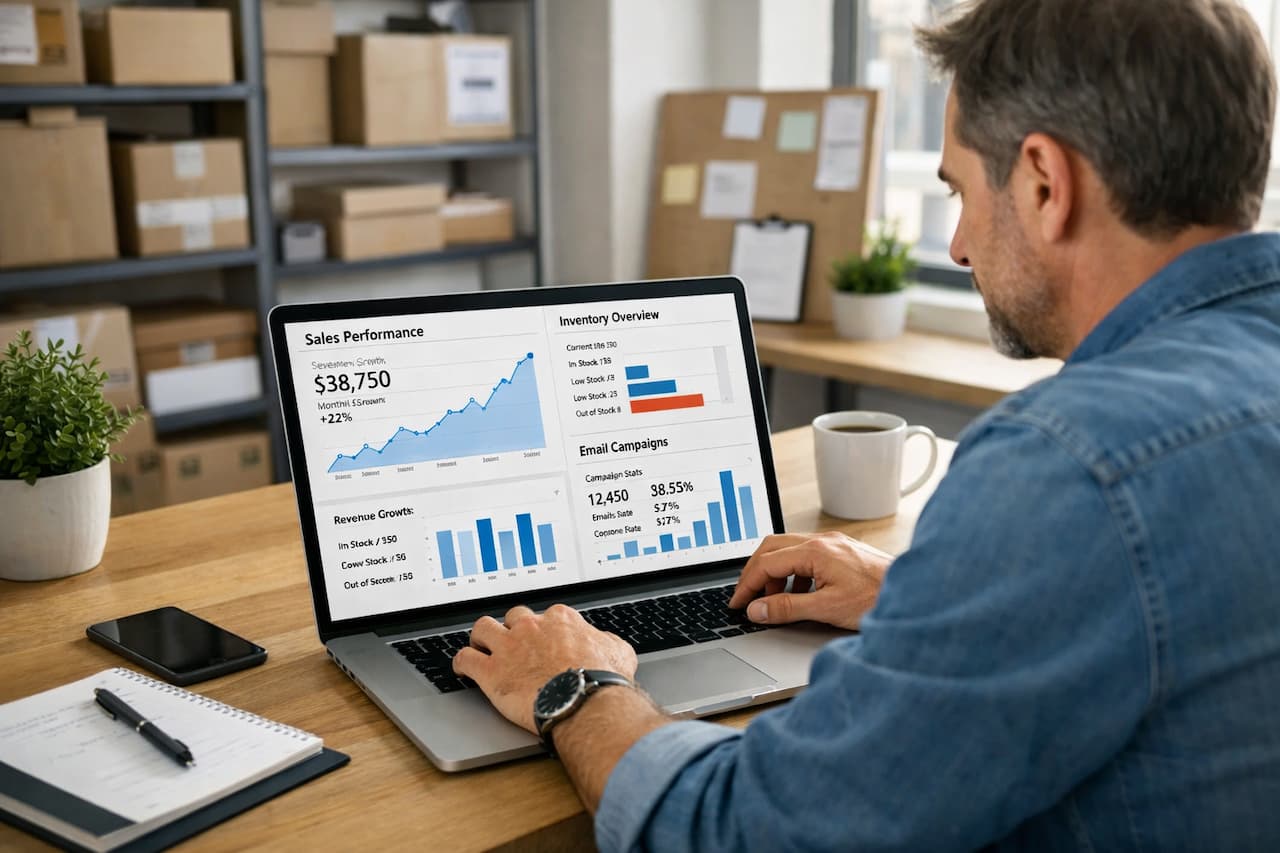
How a Small Business Can Leverage AI to Lower Costs and Scale in 2026
In 2026, artificial intelligence is no longer a luxury for big corporations.
It’s a cost-saving, revenue-scaling necessity for small businesses.
What once required:
- A marketing agency
- A full-time assistant
- A data analyst
- An operations manager
- A customer service team
- A designer
Can now be supported — or dramatically enhanced — by AI tools at a fraction of the cost.
The real power of AI isn’t just automation.
It’s leverage.
The businesses that thrive are not the ones replacing humans with AI.
They are the ones using AI strategically to eliminate waste, improve efficiency, and unlock scalable growth.
Let’s break this down in practical terms.
A Real-World Example: A Small E-Commerce Skincare Brand
To make this practical, imagine a small direct-to-consumer skincare brand:
GlowNaturals
- 3 employees
- £25,000 monthly revenue
- Shopify store
- Instagram + email marketing
- Limited marketing budget
- Customer service handled manually
The founder wants to:
- Reduce operational costs
- Increase profit margins
- Scale revenue to £75,000/month
- Avoid hiring too early
Here’s how AI transforms this business.
PART 1: Using AI to Lower Business Costs
1. Marketing & Content Creation

Marketing is one of the largest expenses for small businesses.
Traditionally, GlowNaturals would need:
- A copywriter (£500–£1,000 per campaign)
- A designer
- A social media manager
AI can support much of the heavy lifting.
AI Applications:
- Generate email campaigns
- Create product descriptions
- Write blog posts
- Produce ad copy variations
- Suggest social captions
- Design basic visuals
Types of Tools:
- AI writing assistants
- AI image generation tools
- AI ad optimization platforms
- AI content planning tools
GlowNaturals Example:
Instead of paying £800 for monthly email copy, the founder uses AI to:
- Draft weekly campaigns
- Generate subject line variations
- Personalize emails by customer behaviour
- Repurpose content into Instagram posts
Result:
- £800/month saved
- Faster campaign deployment
- More A/B testing opportunities
AI reduces cost while increasing output.
2. Customer Support Automation
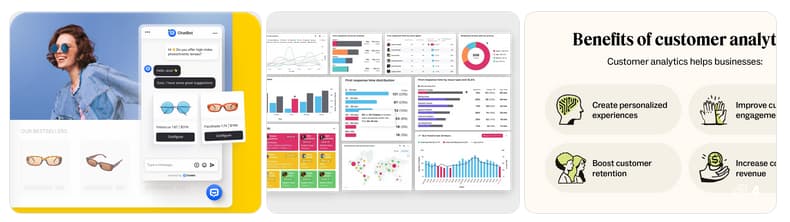
Hiring customer service staff is expensive.
But 60–80% of customer queries are repetitive:
- “Where is my order?”
- “What’s your return policy?”
- “Is this product suitable for sensitive skin?”
AI chatbots and helpdesk assistants can:
- Instantly answer FAQs
- Provide tracking updates
- Handle refund requests
- Escalate complex issues to humans
Result:
Lower labor costs and improved customer experience.
GlowNaturals Example:
Previously:
- 3–4 hours daily answering repetitive questions
After AI:
- 70% of inquiries handled automatically
- Staff focus on high-value interactions
Result:
- Reduced labor hours
- Improved response times
- Higher customer satisfaction
3. Inventory & Demand Forecasting
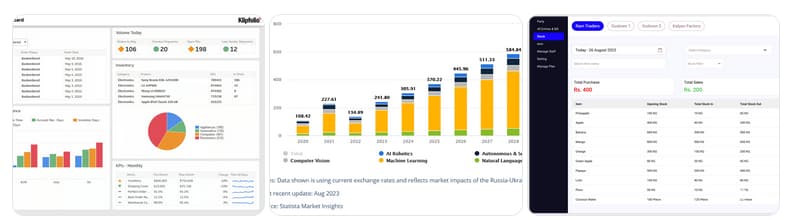
Poor inventory management drains cash.
AI can:
- Analyze sales trends
- Predict seasonal spikes
- Suggest reorder timing
- Detect slow-moving stock
Tools:
- AI-powered analytics platforms
- Smart inventory management systems
GlowNaturals Example:
AI predicts increased demand before seasonal spikes.
Result:
- Avoids stockouts
- Prevents over-ordering
- Improves cash flow management
4. Financial Analysis & Cost Optimization
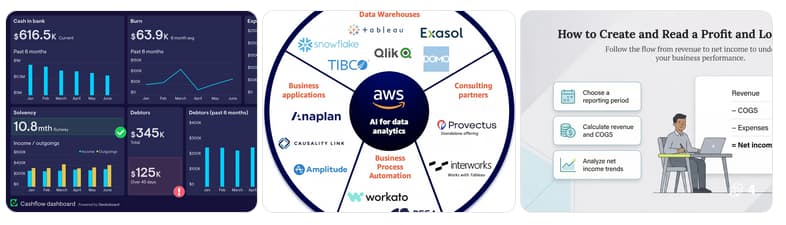
Instead of hiring a financial analyst, AI dashboards now:
- Track expenses in real time
- Analyze ad performance
- Forecast monthly revenue
- Identify wasteful spending
GlowNaturals discovers:
- One ad campaign is burning budget
- One product has low margins
- Shipping costs can be optimized
Result:
Smarter financial decisions without hiring a full-time analyst.
PART 2: Using AI to Scale the Business
Saving money is step one.
Scaling revenue is step two.
AI helps businesses grow without proportionally increasing costs.
1. Personalization at Scale
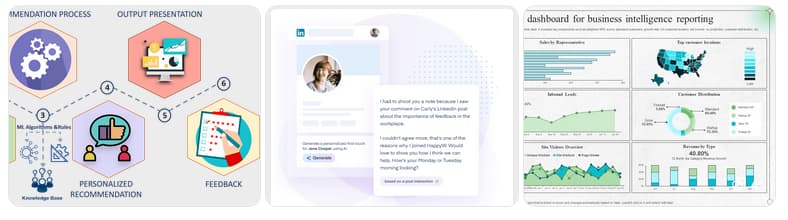
AI allows:
- Dynamic product recommendations
- Personalized emails
- Targeted ads
- Behavioral segmentation
GlowNaturals Example:
AI identifies:
- Customers who buy moisturizers but not serums
- Customers likely to reorder within 30 days
Automated campaigns target those segments.
Result:
- Increased repeat purchase rate
- Higher customer lifetime value
2. Advertising Optimization
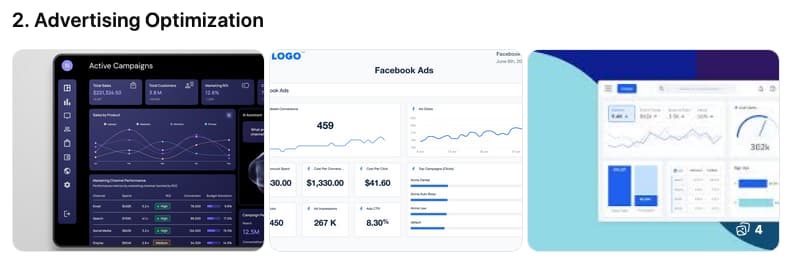
AI-powered ad platforms:
- Automatically test creatives
- Adjust bidding
- Optimize targeting
- Reallocate budget in real time
Instead of manually guessing what works, AI learns from performance data.
Result:
- Lower cost per acquisition
- Higher conversion rates
- Faster scaling of winning ads
3. Product Development Insights
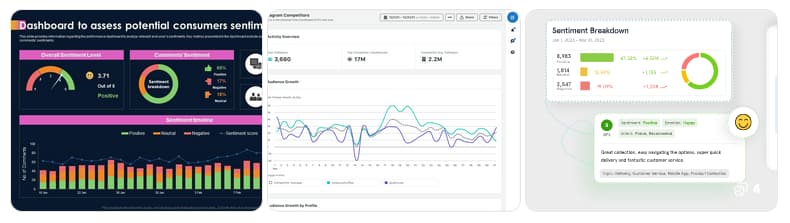
AI analyzes:
- Customer reviews
- Social media comments
- Support tickets
- Competitor data
It identifies:
- Common complaints
- Feature requests
- Emerging trends
GlowNaturals discovers:
Customers want fragrance-free versions.
They launch a new line based on AI-driven insight.
Result:
- Higher conversion rates
- Stronger market alignment
- Reduced product development risk
4. Workflow Automation
AI combined with automation tools can:
- Trigger reorder emails
- Update CRM records
- Sync inventory
- Assign tasks
- Generate weekly reports
Instead of hiring an operations manager, AI manages routine processes.
Result:
- Lean team
- Reduced payroll growth
- Higher operational efficiency
Cost Comparison: Then vs Now
Five years ago, GlowNaturals would need:
- Marketing agency: £2,000+/month
- Customer support rep: £1,500+/month
- Data analyst: £2,500+/month
- Operations assistant: £1,800+/month
Today:
AI tools may cost:
£200–£500/month total
The performance?
Often superior due to speed and real-time data analysis.
The leverage is unprecedented.
Important: AI Is an Accelerator, Not a Replacement
AI should not replace human judgment.
The founder still:
- Approves final messaging
- Reviews analytics insights
- Makes strategic decisions
- Oversees brand positioning
AI handles:
- Repetitive tasks
- Data-heavy processes
- Optimization testing
- First drafts
The human handles:
- Vision
- Creativity
- Brand voice
- Strategy
That combination is where real scaling happens.
The Scaling Formula for 2026
For small businesses, AI provides:
- Lower operational overhead
- Higher output per employee
- Faster testing cycles
- Smarter decision-making
- Better customer personalization
Instead of hiring five people to grow revenue 3x,
AI allows you to grow revenue 3x with minimal team expansion.
That protects margins.
And strong margins are what truly build sustainable businesses.
Final Takeaway
In 2026, small businesses have access to tools that were once reserved for enterprise-level corporations.
AI is not just about automation.
It’s about:
- Cost efficiency
- Intelligent scaling
- Faster iteration
- Strategic growth
The small business that learns to integrate AI into:
- Marketing
- Customer service
- Analytics
- Inventory
- Operations
Will outperform competitors still operating manually.
The opportunity isn’t theoretical.
It’s practical, measurable, and available now.
The only question is:
Will your business operate with 2020 efficiency —
or 2026 leverage?