






Artificial Intelligence is everywhere.
It’s writing emails, recommending what you watch, detecting fraud on your bank account, helping doctors diagnose disease, and powering self-driving cars. If you’re trying to make money online—or simply trying to keep up with the speed of change—it can feel overwhelming.
The truth?
AI is not something to fear.
But it is something to understand.
In this guide, we’ll break down what AI actually is, how it works (in simple terms), how it’s affecting your daily life, and most importantly—how you can use it to create opportunity without becoming overly dependent on it.
What Is Artificial Intelligence?
Artificial Intelligence (AI) refers to computer systems designed to perform tasks that normally require human intelligence.
These tasks include:
- Understanding language
- Recognizing patterns
- Making predictions
- Solving problems
- Generating text, images, and code
AI systems don’t “think” like humans. They analyze massive amounts of data and identify patterns. From those patterns, they generate outputs that appear intelligent.
The most popular example right now?
ChatGPT
How ChatGPT Works (In Simple Terms)
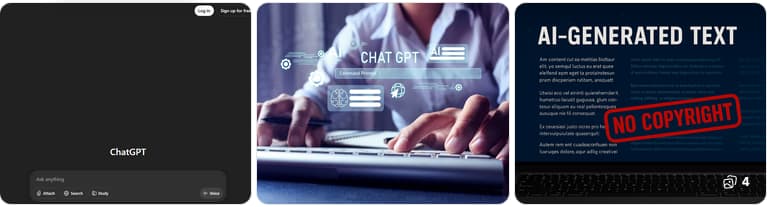
ChatGPT is a large language model trained on enormous amounts of text data. It predicts the most likely next word in a sentence based on patterns it has learned.
But here’s the key:
ChatGPT responds to instructions.
Those instructions are called prompts.
You type a prompt into the query bar, and the AI generates a response based on that input.
For example:
- Weak prompt: “Write about marketing.”
- Strong prompt: “Write a 1,000-word beginner-friendly blog post explaining how freelancers can use AI tools to increase client retention and revenue.”
The quality of your prompt determines the quality of your result.
Communication Is the Real Skill
If you want to get the best out of AI, you must learn how to communicate clearly and strategically.
This is called prompt engineering.
The better your instructions:
- The more specific your context
- The clearer your objective
- The more defined your desired outcome
The better the AI performs.
AI is not magic. It is responsive.
It reflects the clarity of the human using it.
AI Is Much Bigger Than ChatGPT
While ChatGPT gets most of the attention, AI extends far beyond chatbots.
It is deeply embedded in industries you interact with every day.
1. Healthcare

AI helps:
- Detect diseases earlier through image recognition
- Analyze medical scans
- Assist in drug development
- Predict patient risk factors
AI doesn’t replace doctors—it enhances their decision-making by processing data faster than humans can.
2. Automotive Industry
AI powers:
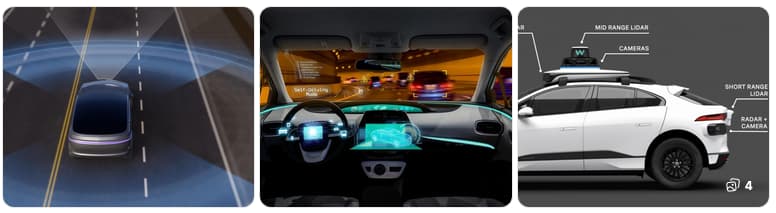
- Driver assistance systems
- Collision detection
- Autonomous vehicle development
- Predictive maintenance alerts
It enhances safety—not by replacing drivers entirely—but by reducing human error.
3. Banking and Fraud Prevention
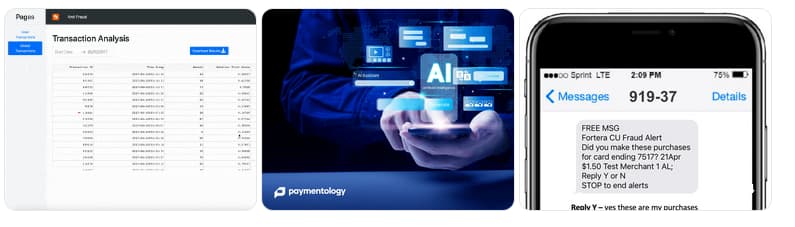
One of the most powerful uses of AI today is fraud detection.
AI systems:
- Monitor millions of transactions in real time
- Detect unusual behavior patterns
- Flag suspicious activity instantly
- Prevent financial losses before they happen
Banks rely on AI to protect customers. Without it, fraud would be significantly harder to control.
Is AI Going to Replace Jobs?
This is the big question.
There has been enormous media coverage suggesting AI will drastically reshape the job market.
And yes—AI will change jobs.
But here’s what’s important:
AI does not replace human intelligence.
It augments it.
AI can:
- Draft emails
- Analyze spreadsheets
- Create content
- Automate repetitive tasks
But it cannot:
- Replace emotional intelligence
- Build authentic relationships
- Exercise human judgment in complex moral situations
- Think creatively the way humans do
The professionals who thrive in the next decade won’t be those who avoid AI.
They’ll be those who learn how to use it strategically.
The Incredible Opportunities AI Creates
If you want to make money online, AI is one of the greatest leverage tools ever created.
Here’s why:
1. Speed
AI reduces research time from hours to minutes.
2. Scalability
You can generate:
- Blog posts
- Marketing campaigns
- Social media strategies
- Sales funnels
- Product ideas
Faster than ever before.
3. Lower Barriers to Entry
You no longer need:
- A full-time designer
- A research team
- A copywriting department
AI allows solopreneurs to compete at higher levels.
But Here’s the Warning: The Danger of Over-Reliance
This is where many people go wrong.
AI is powerful—but over-reliance is dangerous.
If you:
- Stop thinking critically
- Stop verifying information
- Stop developing your own skills
- Let AI make every decision
You risk losing your edge.
AI can:
- Make confident mistakes
- Generate inaccurate information
- Create generic content
- Miss context
If you blindly trust it, you can produce poor results at scale.
The worst thing a person can do is become lazy because of AI.
Laziness leads to dependency.
Dependency leads to diminished skills.
Diminished skills make you replaceable.
That’s the real risk.
How to Use AI the Right Way
The goal is not to let AI replace you.
The goal is to let AI enhance you.
Here’s the mindset shift:
Instead of asking:
“Can AI do this for me?”
Ask:
“How can AI help me do this better?”
Use AI to:
- Brainstorm ideas
- Refine your writing
- Analyze data
- Accelerate research
- Improve productivity
But always:
- Add your voice
- Apply your judgment
- Verify facts
- Maintain creativity
AI should amplify your intelligence—not replace it.
The Future Belongs to Skilled AI Users
People who fear AI often do so because they don’t understand it.
People who thrive with AI treat it as a tool.
Think of AI like a calculator.
When calculators were introduced, people feared they would destroy mathematical ability. Instead, they allowed mathematicians and engineers to solve more advanced problems.
AI is similar.
It removes friction from lower-level tasks so you can focus on higher-level thinking.
Final Thoughts: Adapt, Don’t Abdicate
AI is not going away.
It will continue to evolve. It will integrate deeper into healthcare, banking, transportation, marketing, and everyday life.
The key to thriving is not resistance.
It’s intelligent adaptation.
Learn:
- How AI works
- How to write better prompts
- How to combine AI output with human insight
- How to maintain your critical thinking skills
Use AI as a tool for growth.
But never hand over your thinking entirely.
Because in a world powered by artificial intelligence,
your real competitive advantage will always be
your human intelligence.