
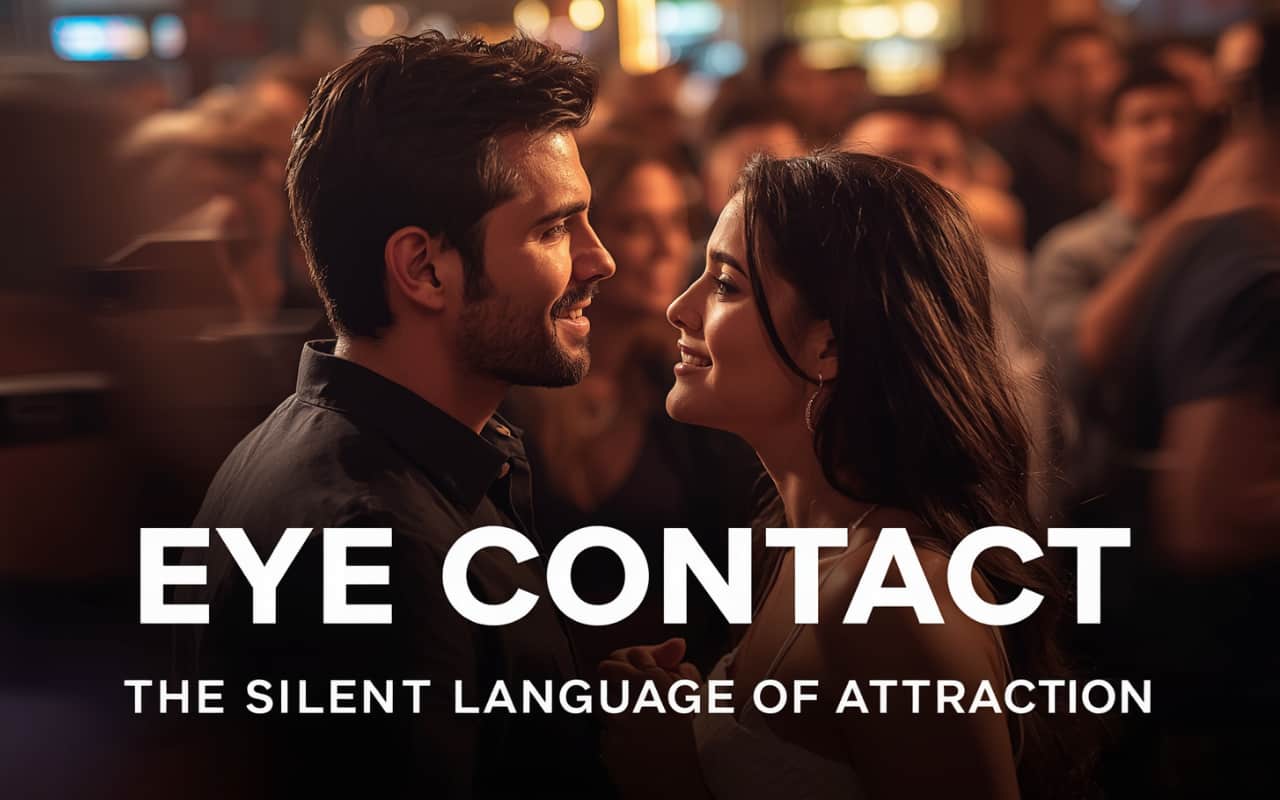
Eye contact is one of the most powerful forms of nonverbal communication. Before a single word is spoken, your eyes are already telling a story—about your confidence, your intentions, your emotional state, and how you perceive the person in front of you. In many ways, eye contact is a mirror of the mind: it reveals what words often try to hide.
At its core, eye contact is about presence. When you look someone in the eyes, you are saying, “I see you, I am here with you, and I am not afraid of this moment.” That simple act carries weight far beyond language. It creates connection, builds trust, and often determines whether someone feels drawn to you or distanced from you.
What Strong Eye Contact Says About You
Strong, calm eye contact communicates confidence, self-assurance, and emotional stability. It signals that you are comfortable in your own skin and not easily intimidated. People who maintain healthy eye contact are often perceived as more trustworthy, authentic, and socially aware.
On the other hand, confident eye contact does not mean staring aggressively or trying to dominate a conversation. It means being present, relaxed, and engaged. When done correctly, it creates a subtle but powerful sense of connection that words alone cannot achieve.
Why Eye Contact Is So Powerful in Attraction
In the context of attraction, eye contact plays a crucial role. It is often the first unspoken indicator of interest between two people. When a man and a woman lock eyes in a relaxed, natural way, it can create a sense of chemistry that feels almost magnetic.
Sustained eye contact can signal curiosity, confidence, and interest. When paired with a warm expression—such as a slight smile or relaxed facial muscles—it can communicate attraction without a single word. This is often where subtle tension builds, which can be a key ingredient in romantic interest.
How Long Is Ideal Eye Contact Between a Man and a Woman?
There is no rigid rule, but in general, holding eye contact for 2–4 seconds during a conversation is considered natural and comfortable.
- Short glances (1–2 seconds): Casual, polite, non-threatening
- Moderate eye contact (2–4 seconds): Engaged, confident, and attentive
- Slightly longer eye contact (4–6 seconds): Can signal interest or attraction if paired with a relaxed demeanor
The key is balance. Too little eye contact can make you seem disinterested or insecure, while too much can feel intense or uncomfortable. The most attractive eye contact is calm, natural, and effortlessly present.
Why People Find Eye Contact Difficult
For many people, maintaining eye contact feels uncomfortable or even intimidating. This is often due to:
- Social anxiety or insecurity
- Fear of judgment or being “seen”
- Lack of confidence or self-assurance
- Cultural or upbringing differences
- Overthinking or hyper-awareness of behavior
Eye contact requires a level of vulnerability. When you look into someone’s eyes, you are, in a sense, allowing yourself to be seen. This can feel uncomfortable for those who are not used to it—but with practice, it becomes a powerful tool for confidence and communication.
When Eye Contact Becomes Creepy or Uncomfortable
While eye contact can be attractive and engaging, it can also cross into discomfort if misused. Eye contact becomes unsettling when it is:
- Too intense without breaks
- Accompanied by a blank or emotionless expression
- Unnatural or forced
- Held for too long without context
- Lacking warmth or social awareness
Healthy eye contact includes natural breaks—looking away occasionally to avoid creating pressure. The goal is connection, not intimidation.
Eye Contact as a Sign of Physical Interest
When used correctly, eye contact can be a subtle but clear sign of physical or romantic interest. You may notice:
- Slightly longer-than-normal eye contact
- Softening of the eyes or a gentle smile
- Repeated eye contact followed by brief glances away
- Eye contact paired with relaxed body language
This type of interaction creates a sense of tension and curiosity. It invites the other person into a shared moment of unspoken understanding, often signaling attraction without explicitly stating it.
What Lack of Eye Contact Really Means
A lack of eye contact can be interpreted in several ways, but in the context of attraction and social interaction, it often suggests:
- Lack of confidence
- Disinterest or lack of engagement
- Nervousness or insecurity
- Emotional distance
For example, if a man avoids eye contact with a woman he is interested in, it can unintentionally signal that he is not confident or not truly engaged. This can be a turn-off, especially if the woman initially felt attracted to him. Attraction often requires a sense of presence and connection—without eye contact, that connection weakens.
The Balance of Eye Contact: Confidence Meets Awareness
The true power of eye contact lies in balance. It is not about staring, nor is it about avoiding—it is about connecting. Strong eye contact should feel natural, respectful, and grounded in confidence.
When you master this subtle art, you enhance not only your communication but also your presence. People feel your energy, your confidence, and your authenticity. And in many cases, that alone can make the difference between being noticed and being unforgettable.
Final Thought
Eye contact is more than just a visual interaction—it is a language of presence, confidence, and emotional intelligence. It can build attraction, establish trust, and deepen human connection in ways that words never can.
Mastering eye contact is not about control—it is about awareness. When you look someone in the eyes with intention, warmth, and confidence, you are not just seeing them… you are truly connecting with them.