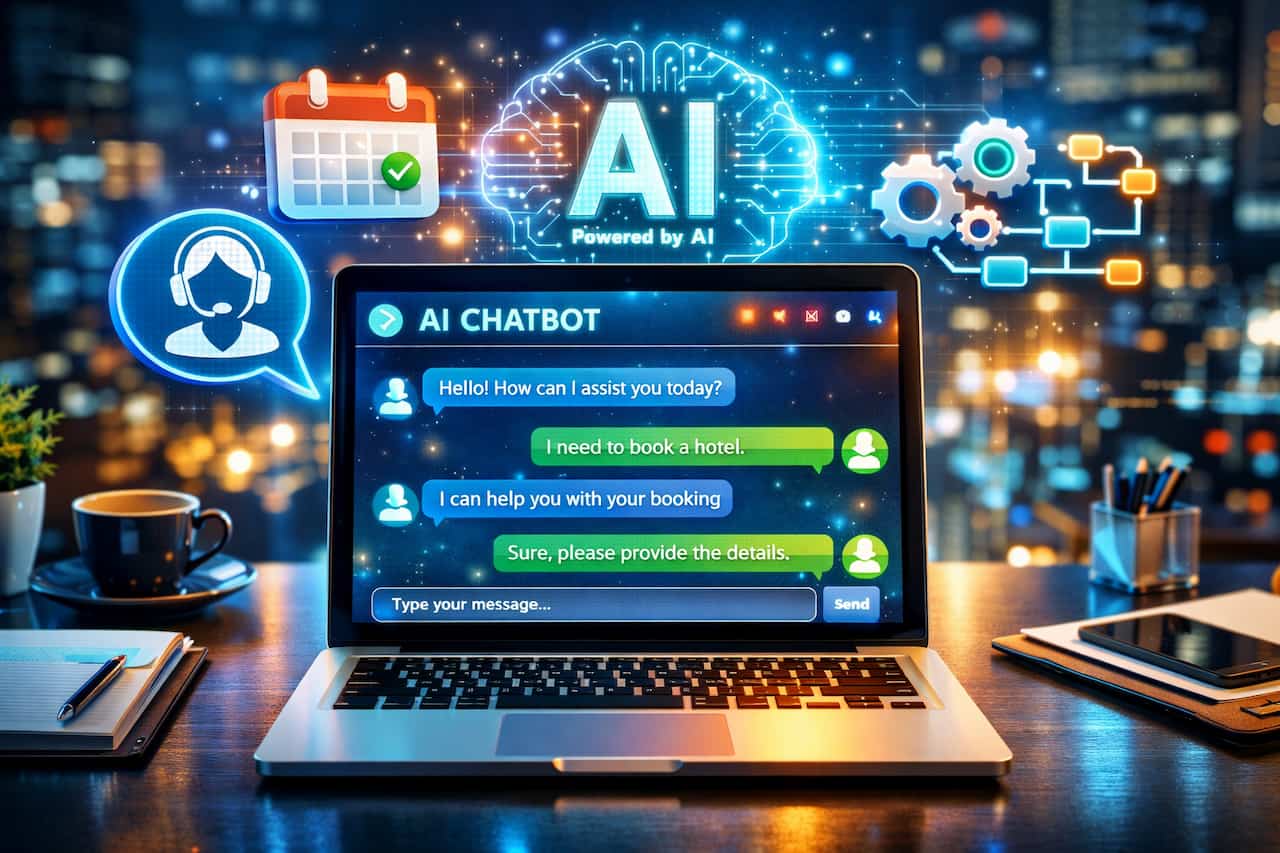
Artificial intelligence is transforming the way businesses interact with customers. One of the most practical and profitable AI tools today is the chatbot. With platforms like ChatGPT, entrepreneurs can now create powerful chatbots that answer customer questions, automate support, and improve customer engagement.
In the past, building chatbots required advanced programming skills. Today, AI has made it possible for beginners to design sophisticated chatbot systems that can be deployed on websites, messaging platforms, and mobile apps.
This guide will walk you through:
- How AI chatbots work
- The benefits of chatbots for small businesses
- Step-by-step chatbot workflows
- How to integrate chatbots into websites
- Monetization strategies for a chatbot business
If you’re looking to start an AI chatbot business, this guide will show you exactly how to begin.
Why Small Businesses Need AI Chatbots
Small businesses often struggle to keep up with customer inquiries. Potential customers frequently have questions such as:
- What are your opening hours?
- How much do your services cost?
- Where are you located?
- Can I book an appointment?
When businesses fail to respond quickly, customers often move on to competitors.
This is where a chatbot for small business becomes incredibly valuable.
AI chatbots can:
- Respond instantly to customer questions
- Provide information 24/7
- Collect customer details
- Schedule appointments
- Direct customers to the right services
Instead of hiring additional staff, businesses can use AI to automate these interactions.
This makes chatbots one of the most profitable AI tools for business automation.
What Is an AI Chatbot?
An AI chatbot is a software tool designed to simulate human conversation. It uses artificial intelligence to understand questions and provide relevant responses.
Modern chatbots powered by tools like ChatGPT can understand natural language and provide highly accurate responses.
These bots can handle tasks such as:
- answering frequently asked questions
- guiding customers through services
- booking appointments
- collecting contact information
- recommending products or services
As AI technology improves, chatbots are becoming increasingly sophisticated and capable.
Types of Chatbots You Can Build for Businesses
When building a chatbot for small businesses, it’s important to focus on solving specific problems.
Here are several types of profitable chatbot solutions.
Customer Support Chatbots
These bots answer common customer questions automatically.
Businesses such as restaurants, shops, and service providers can benefit greatly from this automation.
Booking and Appointment Chatbots
These bots help customers schedule appointments.
They are ideal for:
- salons
- medical clinics
- consultants
- tutors
- fitness trainers
The bot can check availability and confirm bookings instantly.
Lead Generation Chatbots
These bots capture potential customer information.
They can ask questions like:
- What service are you interested in?
- What is your budget?
- When would you like to get started?
The responses can then be sent to a sales team.
Sales Chatbots
These chatbots guide customers through products or services and recommend the best options.
They can increase conversions by helping customers make purchasing decisions.
Understanding Chatbot Workflows
A chatbot workflow is the sequence of steps that the bot follows when interacting with a user.
Designing a clear workflow is one of the most important parts of building a chatbot.
Here is an example workflow for a restaurant chatbot.
Step 1: Greeting Message
The chatbot welcomes the user.
Example:
“Hello! Welcome to our restaurant. How can I help you today?”
Step 2: Present Options
The bot offers a few choices:
- View menu
- Book a table
- Ask a question
Step 3: Process User Input
The chatbot analyses the user’s request.
If the customer selects “Book a table,” the bot collects:
- date
- time
- number of guests
Step 4: Confirm the Request
The chatbot confirms the booking and stores the information.
Step 5: Send Follow-Up
The bot sends confirmation messages or reminders.
By mapping out workflows like this, you can create highly effective chatbot experiences.
How to Build Chatbots Using ChatGPT
Tools like ChatGPT can help design and build chatbot systems.
You can use ChatGPT to:
- generate chatbot conversation scripts
- design workflows
- create responses for different scenarios
- write chatbot code snippets
- develop chatbot prompts
Example prompt:
Create a chatbot workflow for a dental clinic that answers common questions and allows patients to schedule appointments.
ChatGPT will generate structured responses and conversation flows that you can implement in chatbot platforms.
Platforms for Building Chatbots
Several tools allow entrepreneurs to build chatbots without advanced coding skills.
Examples include:
- ManyChat
- Tidio
- Zapier
These platforms allow you to create chatbots that integrate with websites and messaging services.
Integrating Chatbots with Websites
One of the most common ways businesses use chatbots is on their websites.
A chatbot can be placed as a chat widget in the corner of a website page.
When visitors arrive, the bot can greet them and offer assistance.
Website chatbots can:
- answer questions instantly
- guide users through services
- capture leads
- provide support
This dramatically improves the customer experience.
Many chatbot platforms provide simple embed codes that can be added to a website in minutes.
Chatbots for Messaging Platforms
Chatbots can also be integrated into messaging services.
Examples include:
- website chat widgets
- social media messaging
- mobile messaging platforms
These integrations allow businesses to interact with customers wherever they prefer to communicate.
Monetization Options for an AI Chatbot Business
If you’re building chatbots for clients, there are several ways to monetize your services.
Setup Fees
You can charge businesses for designing and installing their chatbot.
Typical setup fees range from:
£200 to £1,000 depending on complexity.
Monthly Subscription Fees
Many chatbot businesses charge monthly fees for maintenance and updates.
Examples:
- £29/month
- £49/month
- £99/month
AI Consulting Services
Some entrepreneurs offer AI consulting services where they help businesses identify automation opportunities.
This can include:
- chatbot implementation
- workflow optimization
- AI strategy development
Custom Chatbot Development
For more advanced clients, you can build custom chatbots tailored to specific workflows.
Custom projects can command significantly higher fees.
How to Find Clients for Your Chatbot Business
If you’re starting an AI chatbot business, finding clients is essential.
Potential clients include:
- restaurants
- local service providers
- consultants
- real estate agencies
- online stores
You can find clients through:
- local networking
- cold email outreach
- social media
- professional platforms like LinkedIn
Many businesses are eager to adopt AI but don’t know where to start.
Providing simple chatbot solutions can fill that gap.
Why Prompt Engineering Matters for Chatbots
Prompt engineering is the process of giving AI detailed instructions to produce better outputs.
When creating chatbots, prompt engineering helps you design better conversations and workflows.
For example:
Instead of asking AI:
“Create chatbot responses.”
A better prompt would be:
Write a chatbot conversation flow for a hair salon that helps customers book appointments and ask about services.
Detailed prompts produce more useful chatbot scripts and responses.
The Future of AI Chatbots
AI chatbots are becoming a standard tool for modern businesses.
As AI technology improves, chatbots will become even more capable of handling complex interactions.
Businesses that adopt chatbot technology early gain significant advantages:
- faster customer response times
- improved customer satisfaction
- reduced operational costs
For entrepreneurs, this creates a powerful opportunity to build profitable AI tools that businesses need.
Final Thoughts
The demand for chatbots is growing rapidly, especially among small businesses looking for affordable automation solutions.
With tools like ChatGPT, even beginners can design sophisticated chatbot systems without advanced programming skills.
By learning how to create effective chatbot workflows, integrate chatbots with websites, and offer valuable automation services, you can build a successful AI chatbot business.
And as artificial intelligence continues to evolve, those who learn these skills today will be well positioned to thrive in the future digital economy.
