
In today’s hyperconnected world, almost everything we do is tied to the internet — banking, shopping, messaging, streaming, social media, work, education, and even healthcare. But while the internet offers incredible convenience and opportunity, it also exposes us to serious privacy risks, cybercrime, surveillance, data tracking, and hacking attempts. This is where a VPN becomes one of the most powerful digital tools we can use to protect ourselves online.
What Is a VPN?
A VPN (Virtual Private Network) is a powerful cybersecurity tool that encrypts your internet connection and hides your IP address by routing your traffic through secure servers located around the world. In simple terms, a VPN creates a private and protected tunnel between your device and the internet.
Without a VPN, websites, internet service providers, hackers, advertisers, and even public Wi-Fi operators can potentially monitor aspects of your online activity. A VPN dramatically increases your privacy and security by masking your identity and encrypting your data.
How a VPN Works
A VPN creates a secure, encrypted tunnel between your device—such as a laptop, smartphone, or tablet—and a remote server located somewhere else in the world. When you connect to a VPN, your internet traffic is routed through this server, making it appear as though you are browsing the web from the server’s location rather than your actual location.
For example, if you are in Uganda but connected to a VPN server in Los Angeles, California, websites and online services will see your connection as coming from California. This allows you to access content, websites, and streaming services that may be restricted to users located within the United States, while also enhancing your privacy and security online.
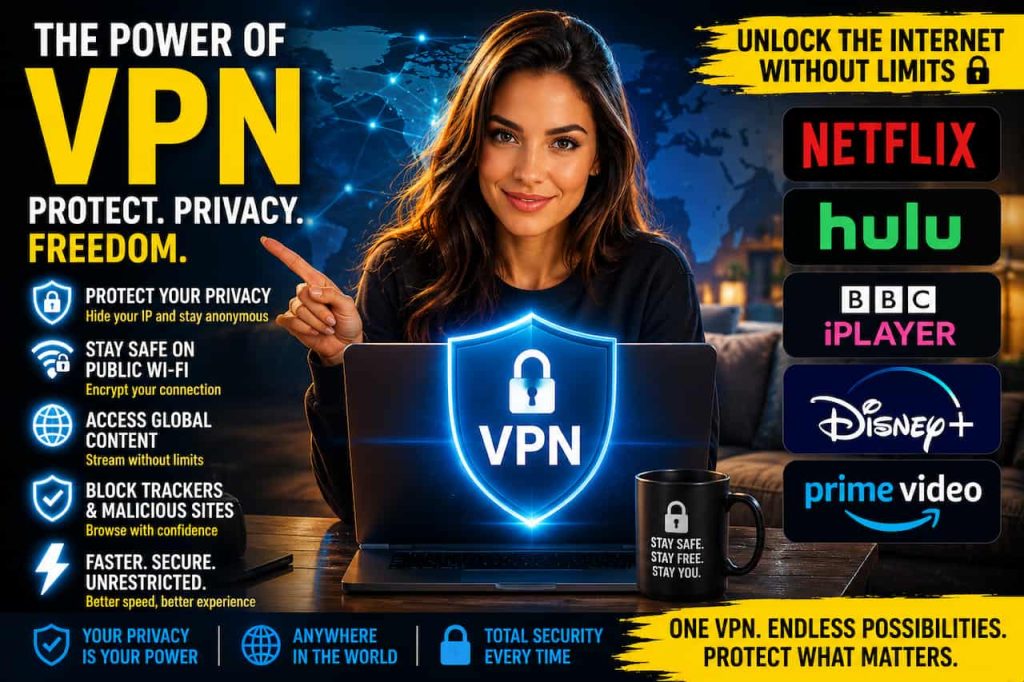
Top 10 Advantages of Using a VPN
A Virtual Private Network (VPN) is one of the most powerful tools for protecting your privacy, increasing your online freedom, and unlocking opportunities on the internet. Here are ten compelling reasons why millions of people use a VPN every day:
- Protect Your Online Privacy – Hide your IP address, location, and browsing activity from advertisers, trackers, hackers, and other prying eyes.
- Secure Your Sensitive Information – Encrypt your internet connection to help safeguard passwords, banking details, credit card information, and private communications.
- Bypass Internet Censorship – Access websites and online services that may be blocked or restricted in certain countries or regions.
- Protect Multiple Devices – Secure your laptop, desktop, smartphone, tablet, and other connected devices under a single VPN account.
- Access Opportunities Beyond Your Borders Some of the internet’s most lucrative business opportunities are hidden behind geographic restrictions. Whether it’s exclusive affiliate programs, online marketplaces, investment platforms, or digital services, access is often limited by location. A VPN empowers you to break through these barriers, giving you the freedom to explore global opportunities, reach new markets, and unlock income streams that would otherwise remain out of reach.
- Save Money While Shopping Online – Online prices often vary by country, with the same product or service sometimes costing significantly more in regions like the UK than in countries such as Bangladesh. A VPN allows you to uncover better deals and save big on online purchases.
- Reduce ISP Data Monitoring – Encrypt your traffic to make it more difficult for internet service providers to monitor your online activities.
- Stream Content from Anywhere – Streaming platforms like Netflix offer different content libraries in different countries. As a result, some shows and movies available in the U.S. may be unavailable anywhere else. A quality VPN can help you access your home streaming library from almost anywhere in the world. However, not all VPNs work reliably with streaming services, as platforms like Netflix actively block many VPN providers.
- Watch International Sports Coverage – Follow live sporting events from around the world and access broadcasts that may not be available in your location.
- Stay Safe on Public Wi-Fi – Protect yourself from common threats on public networks, including data interception, malicious hotspots, and cybercriminals looking to steal personal information.
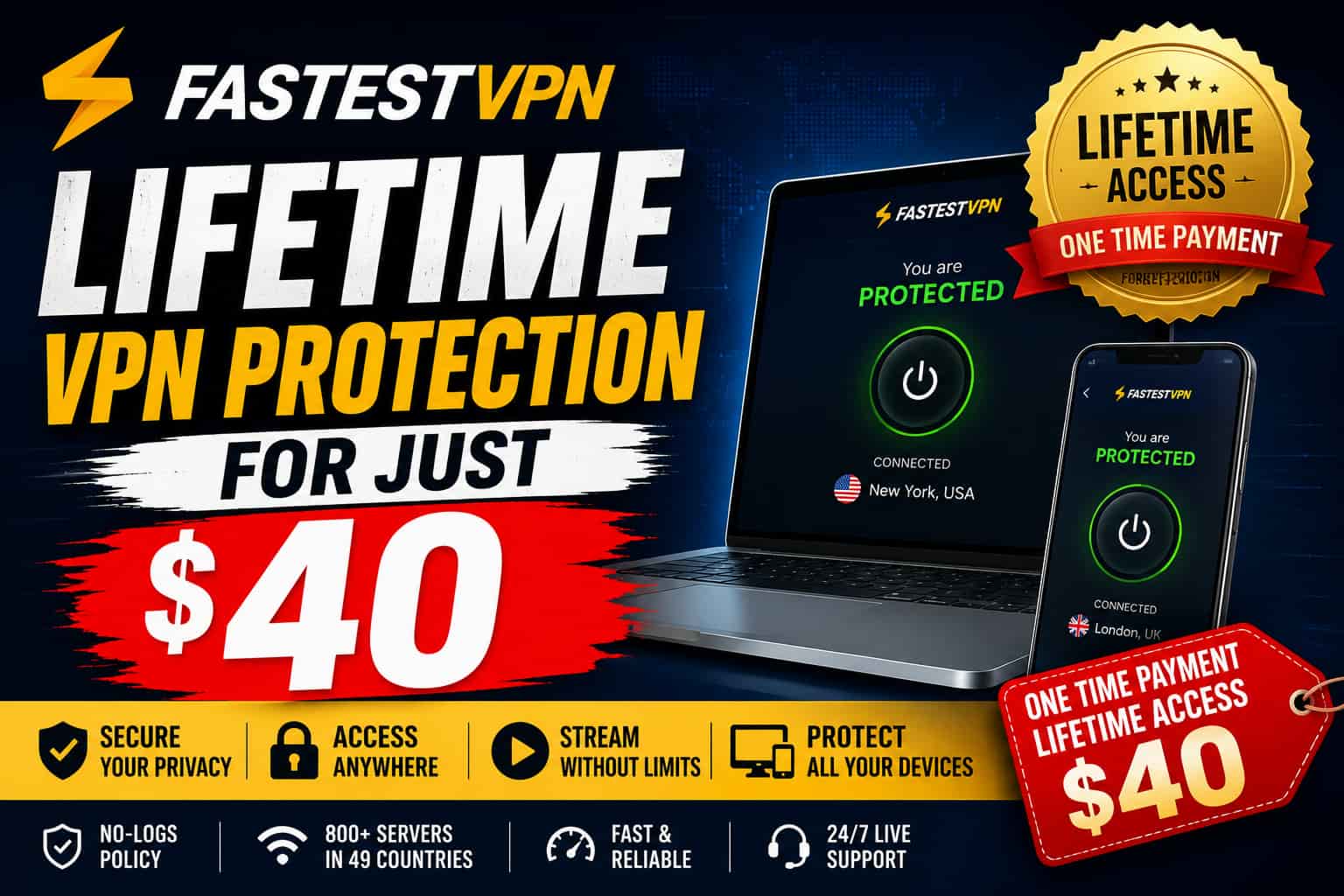
Lock In Lifetime VPN Protection for Just $40
Most VPN providers charge monthly or yearly subscription fees that can easily add up to hundreds of dollars over time. That’s why FastestVPN’s exclusive $40 lifetime plan stands out from the crowd. Instead of paying recurring fees year after year, you make a one-time payment and enjoy VPN protection for life.
In a market dominated by expensive subscriptions, a genuine lifetime VPN plan at just $40 is something you’ll rarely find elsewhere. For many users, the cost can be recovered within a few months compared to traditional VPN pricing.
That said, this deal isn’t for everyone. If you’re looking for the absolute fastest VPN on the market, the largest server network, or a flawless experience on every platform, there are stronger premium alternatives available. However, if your goal is to secure your devices, protect your privacy, stream content from around the world, and avoid paying recurring subscription fees, FastestVPN delivers exceptional value for the price.
Before taking advantage of this offer, it’s important to understand both the strengths and limitations of the service.

The Pros of FastestVPN
Exceptional Value for Money
The biggest attraction is undoubtedly the lifetime plan. For a one-time payment of just $40, you gain access to a fully featured VPN service without worrying about recurring bills. Over the long term, this can save hundreds of dollars compared to traditional VPN subscriptions. For budget-conscious users, it’s one of the most affordable long-term VPN solutions available.
Strong Privacy and Security
FastestVPN takes user privacy seriously. The service offers an independently audited no-logs policy, meaning your online activity is not tracked or stored. It supports industry-leading VPN protocols including OpenVPN, WireGuard, and IKEv2, while all apps utilize military-grade AES-256 encryption. It also includes two years of free access to the FastestPass password manager.
Excellent for Streaming
FastestVPN successfully unblocks many of the world’s most popular streaming platforms, including:
- Netflix libraries
- Hulu
- HBO
- Disney+
- BBC iPlayer and more
Testing showed smooth HD streaming with little to no buffering on nearby servers. If your primary goal is accessing geo-restricted content, FastestVPN performs impressively well.by servers.
Torrent-Friendly
FastestVPN offers dedicated P2P-optimized servers specifically designed for torrenting.
Combined with its port-forwarding capability, users can often achieve better peer-to-peer connectivity and improved transfer speeds. This makes FastestVPN a solid option for users who regularly download or upload large files.
10 Simultaneous Connections
One account can protect up to ten devices at the same time, making it suitable for individuals and families.
Responsive Customer Support
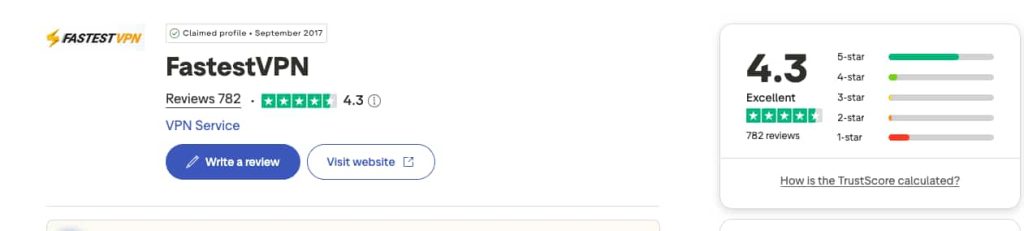
24/7 live chat support is available, and many customers praise the support team for being knowledgeable, responsive, and effective at resolving issues.
31-Day Money-Back Guarantee
You can test the service risk-free for up to 31 days to determine whether it meets your needs.
The Cons of FastestVPN
Smaller Server Network
FastestVPN currently operates around 800 servers across 49 countries and more than 100 locations.
While coverage is strong throughout Europe and includes popular regions such as:
- United States
- Canada
- Australia
- Japan
Its presence is more limited across parts of Asia, Africa, and the Middle East.
For most users seeking popular streaming locations, this won’t be a problem. However, those needing access to more niche regions may find larger VPN providers offer better geographic coverage.
Speeds Are Good, But Not Industry-Leading
Despite the name, FastestVPN is not the fastest VPN available.
Performance is generally very good on nearby servers in North America and Europe, where streaming and browsing remain smooth and responsive.
However, speeds can become less consistent when connecting to distant regions such as:
- South America
- Asia
- Certain international locations
For most users, the speeds remain more than adequate for:
- HD streaming
- General browsing
- Video calls
- Torrenting
Power users seeking the absolute fastest gaming and international connection speeds may find premium competitors perform better.
Mac Users May Experience Issues
While FastestVPN works well across most platforms, some users have reported occasional issues with the macOS application.
If you’re a Mac user who requires a completely polished, trouble-free experience, you may want to test the service carefully during the refund period before committing long term.
Who Is This Deal Best For?
FastestVPN is ideal for users who want strong privacy, reliable streaming access, torrenting support, and multi-device protection without paying monthly subscription fees. The lifetime pricing alone makes it one of the most affordable long-term VPN solutions available.
If you’re comfortable with a smaller server network and slightly slower long-distance speeds, the FastInternet.com FastestVPN lifetime deal represents an impressive balance of affordability, security, and everyday performance that is difficult to match at this price point.